


Table of Contents
- What Makes a Travel Souvenir Worth Keeping
- Unique Travel Souvenir Ideas by Category
- Soil-Based Travel Souvenirs: A Genuinely Authentic Keepsake
- Ethical Sourcing and Supporting Local Economies
- Packing Tips for Fragile and Bulky Travel Souvenirs
- How to Display Travel Souvenirs at Home
- Conclusion
Last Updated: August 24, 2026
Most travelers return home with items that felt meaningful in the moment but end up forgotten in a drawer. The best souvenirs carry genuine cultural weight, survive the journey home intact, and earn a permanent place in your living space. At FootWhere, we've identified what separates a truly meaningful keepsake from airport gift shop filler: authenticity, durability, and the story behind the object.
Quick Picks:
- Most Authentic: Soil-based keepsakes (FootWhere), genuine material from the exact destination
- Best Wearable: Locally made textiles and artisan jewelry
- Best for Display: Postcards, pottery, and push-pin travel maps
- Best Edible: Non-perishable culinary goods from local markets
What Makes a Travel Souvenir Worth Keeping
A great travel souvenir anchors a specific memory to a specific place without requiring explanation. The best keepsakes are genuinely local, built to last, and visually or tactilely distinctive enough to spark conversation.
Mass-produced items fail immediately. A miniature Eiffel Tower assembled overseas tells no story about your actual experience. Authentic souvenirs, handcrafted goods, locally sourced materials, destination-specific collectibles, hold cultural heritage in tangible form.
The best souvenir shopping happens at local markets and artisan studios mid-trip, when you have time to assess quality and ask about provenance. Avoid impulse purchases at airport shops before departure.
Plan purchases with your return journey in mind. A souvenir that requires its own checked bag or breaks before reaching your front door is a liability, not a keepsake.
Unique Travel Souvenir Ideas by Category
The strongest souvenir collections draw from multiple categories.
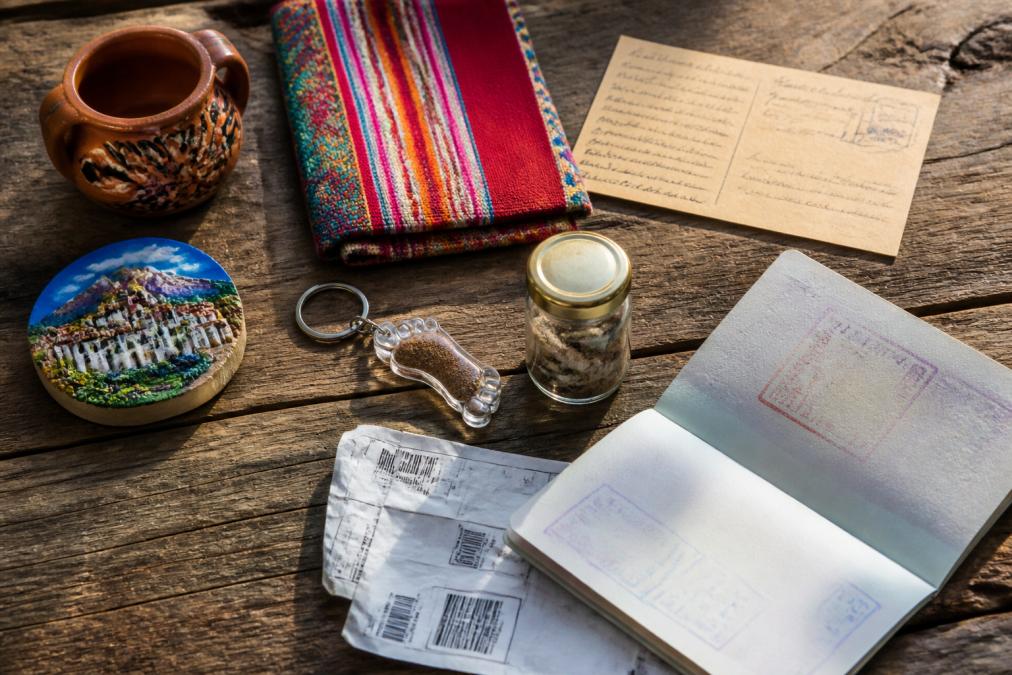
Local Handicrafts and Artisan Goods
Handcrafted items are the gold standard of travel memorabilia. Carved woodwork, woven baskets, hand-thrown ceramics, and embroidered textiles represent genuine cultural immersion and hours of regional mastery.
Buy directly from makers whenever possible. Local markets and artisan cooperatives provide provenance stories firsthand, making the object exponentially more meaningful. Genuine handcrafted goods show minor imperfections, uneven stitching, asymmetrical forms, that mark authenticity, not defects.
According to UNESCO's guidance on intangible cultural heritage and traditional craftsmanship, traditional crafts represent living cultural identity at risk of disappearing when travelers choose mass-produced imitations. Choosing real artisan work is an act of cultural preservation.
Apparel and Wearable Souvenirs
Hand-dyed scarves, locally made leather sandals, and knitted hats from highland communities are wearable souvenirs that integrate into daily life rather than gathering dust. They take minimal luggage space relative to sentimental value.
Check fiber content and construction before buying. Items made from natural fibers, wool, cotton, silk, linen, age well and hold their character better than synthetic blends.
Food and Non-Perishable Culinary Items
Non-perishable culinary goods sidestep customs problems. Sealed spice blends, locally produced olive oils, artisan chocolates, dried teas, and regional hot sauces travel well and clear customs without issue.
Buy vacuum-sealed or factory-sealed items with clear ingredient labels for straightforward customs declarations.
Jewelry and Accessories
Locally made jewelry is compact and durable. Silver filigree work, semi-precious stone settings, hand-carved bone or wood pieces, and traditional beadwork pack small and carry significant cultural weight.
Buy from certified artisan cooperatives or directly from makers at local markets. Ask where materials come from and how long the maker has practiced the craft. Genuine artisans are happy to explain their process.
Postcards, Stationery, and Collectible Paper Goods
Postcards are the most underrated travel memorabilia. They are lightweight, virtually unbreakable, inexpensive, and capture a destination's aesthetic far better than most physical objects. A curated postcard collection tells a traveler's story more eloquently than almost any other format.
Look for locally printed maps, vintage travel posters, hand-illustrated greeting cards, and destination-specific stationery from independent print shops.
FootWhere's postcard collection contains genuine soil from the featured destination sealed inside a foot-shaped cavity, turning a flat collectible into a three-dimensional, location-specific keepsake.
Home Decor, Pottery, and Fridge Magnets
Hand-thrown bowls, hand-painted tiles, and small ceramic figurines made using regional techniques are both functional objects and cultural heritage. The challenge is getting them home intact.
Fridge magnets are small, inexpensive, and easy to pack. A well-curated magnet collection functions as a visual travel map that guests engage with. Choose magnets with genuine artistic quality rather than generic designs.
Christmas Ornaments and Seasonal Keepsakes
Destination-specific Christmas ornaments become annual reminders of trips. Look for ornaments made from local materials, hand-blown glass, carved wood, painted ceramic, rather than mass-produced plastic versions.
Wrap each ornament individually in tissue and store in a dedicated ornament box.
Soil-Based Travel Souvenirs: A Genuinely Authentic Keepsake
Soil-based souvenirs represent the most literal interpretation of authentic travel memorabilia: a physical sample of the actual ground you stood on. FootWhere produces keychains, fridge magnets, postcards, and zipper-pulls containing genuine soil from featured destinations, sealed inside foot-shaped acrylic cavities.
FootWhere items use ultrasonically-welded halves that protect both the graphic insert and soil permanently. The soil is genuinely sourced from the specific destination featured on the item. Each item acknowledges a precise location, not a country or region, but a specific destination, that geographic specificity separates FootWhere from generic souvenir formats.
A keychain containing actual soil from where you stood is fundamentally different from one that merely depicts it.
Ethical Sourcing and Supporting Local Economies
Sustainable tourism depends on where travelers spend their souvenir budget. Purchasing from local artisans keeps money inside the community that created your cultural experience. Buying mass-produced items from large retailers does the opposite.
According to the World Tourism Organization's guidelines on sustainable tourism and local economic development, tourism spending that reaches local producers has significantly higher multiplier effects on community income than spending flowing to international chains.
Prioritize local markets over hotel gift shops. Seek artisan cooperatives, community-run craft centers, and independent studios. Ask vendors directly where goods are made and by whom.
Packing Tips for Fragile and Bulky Travel Souvenirs
Fragile items require dedicated packing strategy. Relying on clothing as the only buffer is unreliable.
Best practices:
- Wrap each fragile item individually in several layers of bubble wrap or foam padding.
- Place fragile items in the center of your bag, surrounded by soft clothing on all sides.
- Use hard-sided luggage for trips where you'll buy breakable goods.
- Carry the most fragile items in your carry-on rather than checked luggage.
- Purchase bubble wrap at your destination if needed.
For bulky items that won't fit in standard luggage, consider shipping directly from the destination. Many artisan shops offer international shipping, often cheaper than airline oversize baggage fees.
| Souvenir Type | Fragility Level | Best Packing Method | Carry-on or Checked |
|---|---|---|---|
| Pottery and ceramics | High | Center of bag, bubble wrap, clothing buffer | Carry-on preferred |
| Christmas ornaments | High | Individual tissue wrap, dedicated box | Carry-on preferred |
| Textiles and scarves | Low | Rolled or folded, any position | Either |
| Postcards and paper goods | Medium | Rigid folder or between books | Either |
| Keychains and magnets | Low | Any position | Either |
| Bottled oils and sauces | Medium | Sealed bag, upright position | Checked only |
Customs and Import Regulations to Know Before You Buy
Customs regulations are the most overlooked aspect of souvenir shopping. Declare everything you purchased abroad. The duty-free exemption for most U.S. travelers is $800 per person, as documented by U.S. Customs and Border Protection's traveler information on duty-free exemptions.
Specific categories face additional restrictions:
- Agricultural products: Fresh fruits, vegetables, and meats are restricted or prohibited. Sealed, commercially processed food items generally clear without issue.
- Animal products: Items made from ivory, certain shells, feathers, or animal skins may be prohibited under the Endangered Species Act.
- Soil: Commercially sealed soil products like FootWhere keepsakes meet import standards, but loose, unprocessed soil is restricted by USDA regulations.
- Alcohol: Duty-free limits apply; quantities above exemption are subject to federal and state taxes.
When in doubt, declare the item. Attempting to conceal items creates far larger problems.
How to Display Travel Souvenirs at Home
The best souvenirs deserve intentional display. A well-curated travel display turns your collection into a living narrative that guests engage with and that gives you daily connection to places you've been.
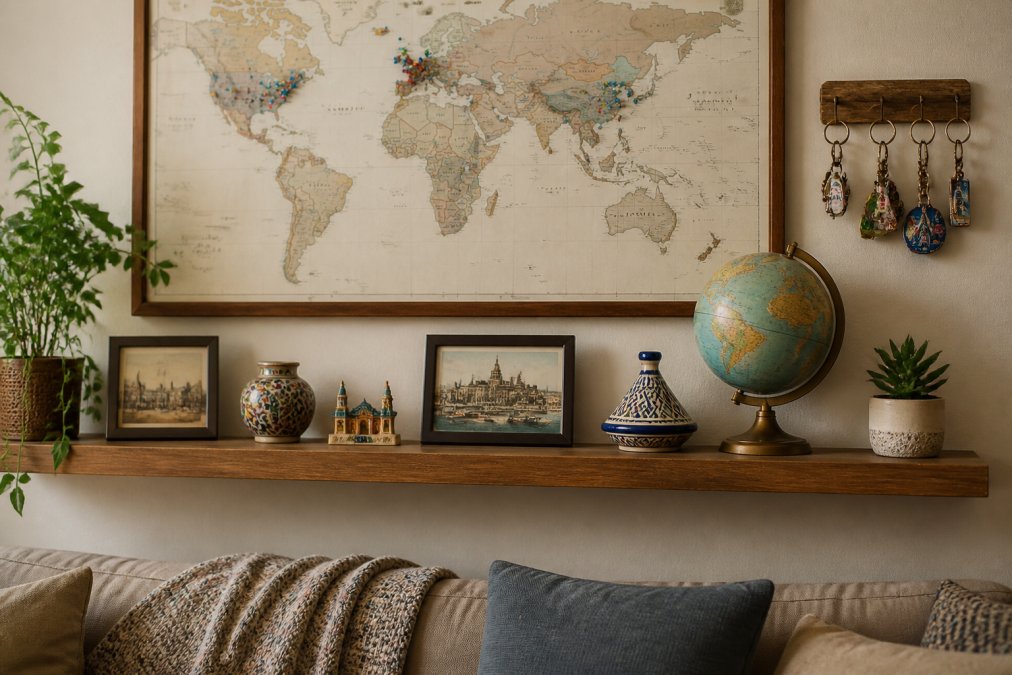
Push-pin or scratch-off world maps serve as anchor pieces. Scratch The World travel maps reveal countries by scratching gold foil. Push Pin Travel Maps offer similar function with three-dimensional results.
Dedicated shelving works better than scattered placement. Group travel souvenirs together so the collection reads as cohesive rather than random clutter.
Framed postcards and paper goods make strong wall art. A gallery wall of destination postcards, vintage travel maps, and hand-illustrated cards creates visually interesting display and conversation pieces.
Memory jars collect small items, ticket stubs, coins, small shells, in clear glass jars labeled by destination, creating physical archives of specific trips.
FootWhere keychains and magnets display immediately and practically. Magnets live on refrigerators as daily-visible collections. Keychains display on decorative hook racks or dedicated boards, keeping them organized and visible.
Every displayed item should be visible, accessible, and connected to a specific memory.
| Souvenir Category | Best Display Method | Durability | Budget-Friendly |
|---|---|---|---|
| Soil keepsakes (FootWhere) | Hook rack, refrigerator, shelf | Very high | Yes |
| Pottery and ceramics | Open shelving, display cabinet | Medium | Varies |
| Postcards and paper goods | Gallery wall, framed display | High | Yes |
| Textiles and woven goods | Wall hanging, framed | High | Varies |
| Christmas ornaments | Annual tree display, shadow box | Medium | Varies |
| Push-pin/scratch-off maps | Wall-mounted, focal point | High | Moderate |
| Artisan jewelry | Display stand, shadow box | High | Varies |
The best souvenirs for world travelers are not the most expensive or elaborate. They are objects that carry genuine connection to a specific place, telling a true story every time someone picks them up or asks about them.
FootWhere's collection of soil-filled keychains, magnets, postcards, and zipper-pulls, each made in the USA and containing genuine soil from featured destinations, addresses exactly this need. Browse the FootWhere collection and find the keepsake that marks the place where you actually set foot.
Frequently Asked Questions
What are the best souvenirs to collect from travels?
The best travel souvenirs are ones that connect directly to the place you visited, handcrafted goods from local artisans, non-perishable food items like spices or tea, destination-specific jewelry, and authentic keepsakes like soil-filled mementos. Avoid mass-produced items that could come from anywhere. A souvenir earns its place on your shelf when it tells a specific story about where you actually set foot, not just where you passed through.
How do you choose meaningful travel souvenirs?
Focus on items tied to the destination's cultural heritage rather than generic tourist merchandise. Ask whether a local artisan made it, whether it uses materials native to the region, and whether it will still feel meaningful five years from now. Small, lightweight items, keychains, magnets, postcards, are easier to transport and just as sentimental as bulkier pieces. If you're buying for someone else, think about how they'll display or use it daily.
What should I know about customs regulations when bringing souvenirs home?
U.S. Customs and Border Protection (CBP) restricts or prohibits certain items from entering the country. Organic materials like soil, seeds, plants, and some animal products require declaration and may be confiscated. Duty-free exemptions generally apply to goods valued under $800 per traveler. Always declare what you're carrying and check the CBP website before purchasing anything made from protected wildlife, exotic wood, or agricultural products abroad.
How do I pack fragile souvenirs so they survive the trip home?
Wrap fragile items, pottery, glass ornaments, ceramic figurines, individually in clothing or bubble wrap before placing them in the center of your bag, surrounded by soft layers. For carry-on luggage, keep the most delicate pieces with you rather than checking them. Hard-sided cases offer better protection for breakables. If an item is truly irreplaceable, consider shipping it home via a tracked parcel service rather than risking checked-bag handling.
What are some budget-friendly souvenir ideas for frequent travelers?
Postcards, fridge magnets, and small artisan trinkets from local markets are consistently the most budget-friendly travel souvenirs. They're lightweight, easy to pack, and don't eat into luggage space. Stamps and pressed pennies are essentially free collectibles that still carry real sentimental value. For a step up in authenticity without a steep price, destination-specific keychains, especially those containing a tangible piece of the location, offer strong meaning for a modest cost.
This article was written using GrandRanker