


Table of Contents
- What Makes Travel Soil Keepsakes Special
- Understanding Collecting Soil From Visited Places
- Unique Travel Souvenir Ideas Beyond Soil
- Step-by-Step Guide to Gifting Soil Keepsakes
- How to Display Travel Mementos Meaningfully
- Preserving Soil Keepsakes for the Long Term
- Making the Gift Personal and Memorable
- Frequently Asked Questions
Last Updated: September 21, 2026
What Makes Travel Soil Keepsakes Special
Gift travel soil keepsakes are tangible reminders of the places where you've actually set foot. Unlike generic postcards or standard souvenirs, they connect you directly to a specific location through an authentic piece of that destination.
When you hold a soil keepsake, you're holding something real from that journey. It transforms a simple souvenir into a conversation piece and memory anchor that brings you back to specific moments and discoveries from your travels.
FootWhere soil keepsakes feature genuine soil from featured destinations sealed inside foot-shaped charms, a design that celebrates where you've truly set foot.
Understanding Collecting Soil From Visited Places
Collecting soil from visited places is a growing trend, but the legal and regulatory landscape is complex. Understanding these rules is essential before collecting or gifting soil keepsakes.
Authenticity and Verification
Authenticity is the core concern. Legitimate soil keepsakes come from documented, verified locations, collected from authentic destinations and sealed immediately to prevent contamination.
When evaluating any soil keepsake, ask: Where exactly was the soil collected? Who collected it and when? How is it sealed and protected? Reputable keepsake makers maintain sourcing documentation for every location. Ultrasonically-welded acrylic construction keeps the soil secure indefinitely.
Legal Restrictions on Soil Collection
National Parks and Protected Federal Lands
The National Park Service enforces the Archaeological Resources Protection Act (ARPA), which prohibits collecting soil, rocks, plants, or artifacts from all 63 national parks and hundreds of protected sites. Violations can result in fines up to $20,000 and potential criminal charges. The Antiquities Act similarly prohibits removing soil from Bureau of Land Management (BLM) property, U.S. Forest Service lands, or other federal property without explicit permission.
Private Property and Trespassing
Collecting soil from private property without permission constitutes trespassing and potentially theft of natural resources.
International Border and Customs Restrictions
When transporting soil across international borders, you must comply with both exporting and importing country regulations. Many countries restrict soil export due to agricultural biosecurity (plant pathogens and invasive species), environmental protection, or cultural heritage laws. U.S. Customs officials can confiscate soil and earth materials even if collection was legal at the source, and travelers may face fines for attempting to import prohibited materials.
Specific Country Examples
Popular destinations with strict soil export restrictions include Egypt (archaeological sites classified as cultural property), Peru (Machu Picchu and protected sites), Australia (beaches and protected areas), and Thailand (temples and protected natural areas). Even soil from less-restricted destinations may be confiscated if customs officials determine it poses a biosecurity risk.
The Safe Alternative: Pre-Verified Keepsakes
The safest approach is to purchase pre-verified soil keepsakes from established sources rather than collecting soil yourself. When you purchase from a reputable maker, the sourcing, documentation, and legal compliance work is already complete. The seller assumes responsibility for legal compliance, not the gift recipient. Most soil keepsakes are legal to own and display in your home; restrictions apply to collection and international transport.
Unique Travel Souvenir Ideas Beyond Soil
Complementary travel souvenir approaches include adventure journals, travel-themed home decor, personalized ornaments, scrapbooking collections, customized luggage tags, and travel documentation displays. The most meaningful souvenirs combine authenticity with personalization and reflect your specific experiences rather than generic destination imagery.
Step-by-Step Guide to Gifting Soil Keepsakes
Gifting gift travel soil keepsakes requires thoughtfulness and preparation. Follow these steps to create a memorable gift experience.
Step 1: Select the Right Format
FootWhere offers keychains for everyday carry, magnets for home display, zipper-pulls for luggage, and multi-piece sets for collectors. Choose based on how the recipient typically displays or uses souvenirs.
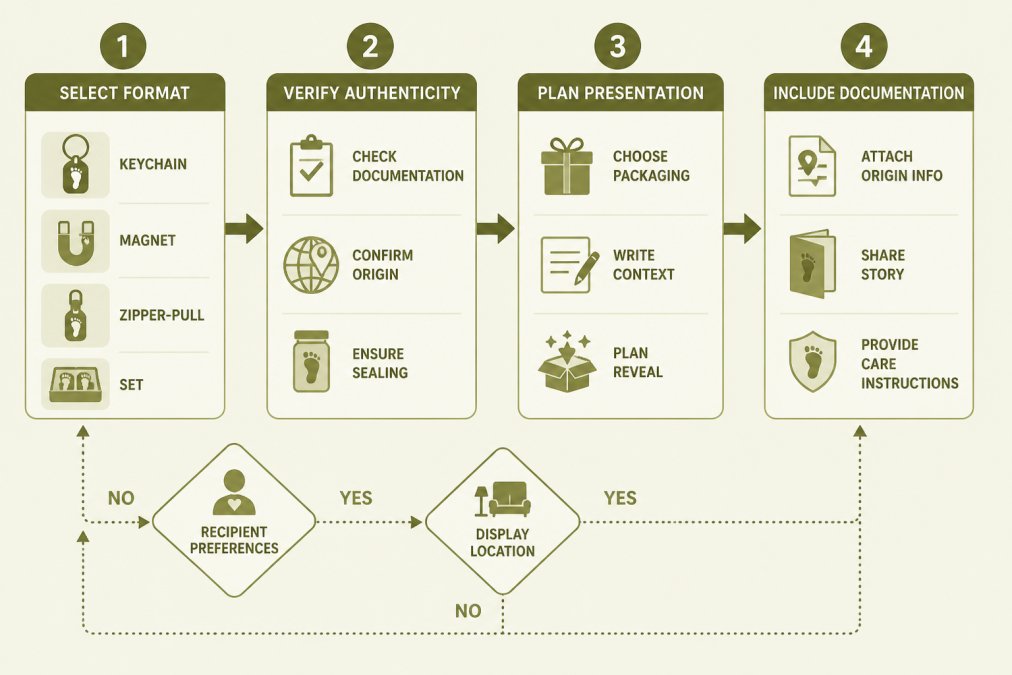
Step 2: Verify Authenticity and Origin
Confirm the keepsake comes from a verified source with origin documentation, transparent sourcing, proper seal integrity, and domestic manufacturing. FootWhere keepsakes include verified sourcing and ultrasonically-welded construction that ensures the seal remains intact indefinitely.
Step 3: Plan Your Presentation
Frame the gift as a celebration of shared travel experiences or recognition of the recipient's adventurous spirit. Pair it with a story explaining why you chose this destination, reference shared memories if applicable, emphasize the authenticity, and connect to their interests. This transforms the keepsake from a simple object into a meaningful reminder.
Step 4: Include Documentation
Include destination name, collection date, why the destination matters, display and care instructions, and authenticity verification. This documentation transforms the keepsake into a complete travel memory artifact.
How to Display Travel Mementos Meaningfully
Create a dedicated travel memorabilia display space grouped by theme: destinations, trips with specific people, or regions. Arrange soil keepsakes by region, timeline, trip type, or combined with photos and maps. This creates a visual representation of your travel history.
Guatemala FootWhere Souvenir Keychain. →
Preserving Soil Keepsakes for the Long Term
Soil keepsakes are designed for durability, but understanding the specific threats to their longevity and implementing targeted preservation strategies ensures they remain intact and meaningful for decades.
Understanding Degradation Threats
Soil and acrylic keepsakes face several distinct degradation mechanisms. Recognizing these threats allows you to prevent them.
Moisture Intrusion
Moisture is the primary threat to sealed soil keepsakes, causing soil settling, mold growth, metal corrosion, and acrylic cloudiness. Moisture intrusion typically occurs in high-humidity environments (above 60% relative humidity) or in bathrooms, basements, or near windows where condensation forms.
UV Light Degradation
Direct or prolonged sunlight fades destination graphics, yellows acrylic, and may fade soil color. Keepsakes displayed on south-facing windowsills degrade noticeably within 3-5 years.
Temperature Fluctuations
Extreme temperature swings and sustained heat accelerate degradation by stressing seams, warping acrylic, and causing brittleness.
Physical Impact and Seal Compromise
Optimal Storage Conditions
Store soil keepsakes in stable conditions: maintain temperatures between 60-75°F, keep relative humidity below 50%, store away from direct sunlight, and protect from impact in padded boxes. Maintain documentation noting origin, date acquired, and care notes.
Preservation Techniques for Organic Souvenirs
Soil itself is stable when sealed properly, but the overall keepsake requires active monitoring and care.
Seal Integrity Inspection
- Cloudiness or discoloration inside the acrylic: Indicates moisture intrusion. The keepsake should be replaced.
- Visible cracks or chips in the acrylic: Compromises the seal. Replacement is necessary.
- Separation at the seams: The ultrasonically-welded edges should be seamless. Any visible gaps indicate seal failure.
- Soil clumping or settling: Minor settling is normal, but significant clumping suggests moisture exposure.
Cleaning and Maintenance
- Use a soft, dry microfiber cloth to gently wipe the exterior
- For stubborn dust, lightly dampen the cloth with distilled water (not tap water, which can leave mineral deposits)
- Avoid abrasive cloths or harsh chemicals, which can scratch or cloud the acrylic
- Never use acetone, alcohol, or solvent-based cleaners
Handling Best Practices
Minimize physical stress on keepsakes:
- Handle keychains and zipper-pulls gently; avoid excessive bending or flexing of the attachment point
- When moving keepsakes, wrap them in soft cloth or bubble wrap
- Store collections in padded boxes rather than loose in drawers
- Avoid storing keepsakes in pockets or bags where they experience pressure
Long-Term Storage for Collections
If you're building a collection of soil keepsakes over time, implement a storage system that protects multiple items:
- Use acid-free storage boxes (available from archival suppliers) to prevent chemical degradation
- Separate keepsakes with acid-free tissue paper to prevent surface contact
- Store boxes in a climate-controlled closet or cabinet
- Maintain a spreadsheet or document listing each keepsake's origin, date acquired, and storage location
- Check the collection annually for signs of degradation
Making the Gift Personal and Memorable
For travelers you've journeyed with: Choose a destination from a shared trip. Include photos from that journey and remind them of specific moments, the meal you shared, the sunset you watched, the challenge you overcame together.
Frequently Asked Questions
How do I know if a travel soil keepsake is authentic?
Authentic soil keepsakes come from reputable vendors who source directly from verified destinations. Look for products with detailed origin documentation, transparent sourcing practices, and quality construction. FootWhere soil keepsakes, for example, feature ultrasonically-welded acrylic construction and high-resolution destination graphics. Ask vendors for their verification process and check customer reviews to confirm authenticity before gifting.
What's the best way to package soil keepsakes as gifts?
Present soil keepsakes in a way that tells the story. Include a handwritten card explaining the destination, the date of travel, and why that location matters. Place the keepsake in a small gift box with tissue paper, and consider adding a printed card about the destination's history or significance. This context transforms a small souvenir into a meaningful commemoration of shared memories or personal adventure.
Are there customs restrictions on gifting soil from other countries?
Yes. The USDA regulates the import and transport of soil and plant material across state and international borders due to concerns about pests and diseases. When gifting soil keepsakes, ensure they comply with these regulations. If collecting soil yourself, verify local regulations before transport or gifting.
How should I display travel soil mementos to make them look intentional?
Treat soil keepsakes as curated collection pieces, not clutter. Display them on floating shelves with other travel artifacts like maps or photos from the same trip. Group keepsakes by region or year to create a visual narrative of your adventures. Magnetic versions work well on office filing cabinets or refrigerators where they spark conversation. Consider a shadow box with labels identifying each destination and visit date.